
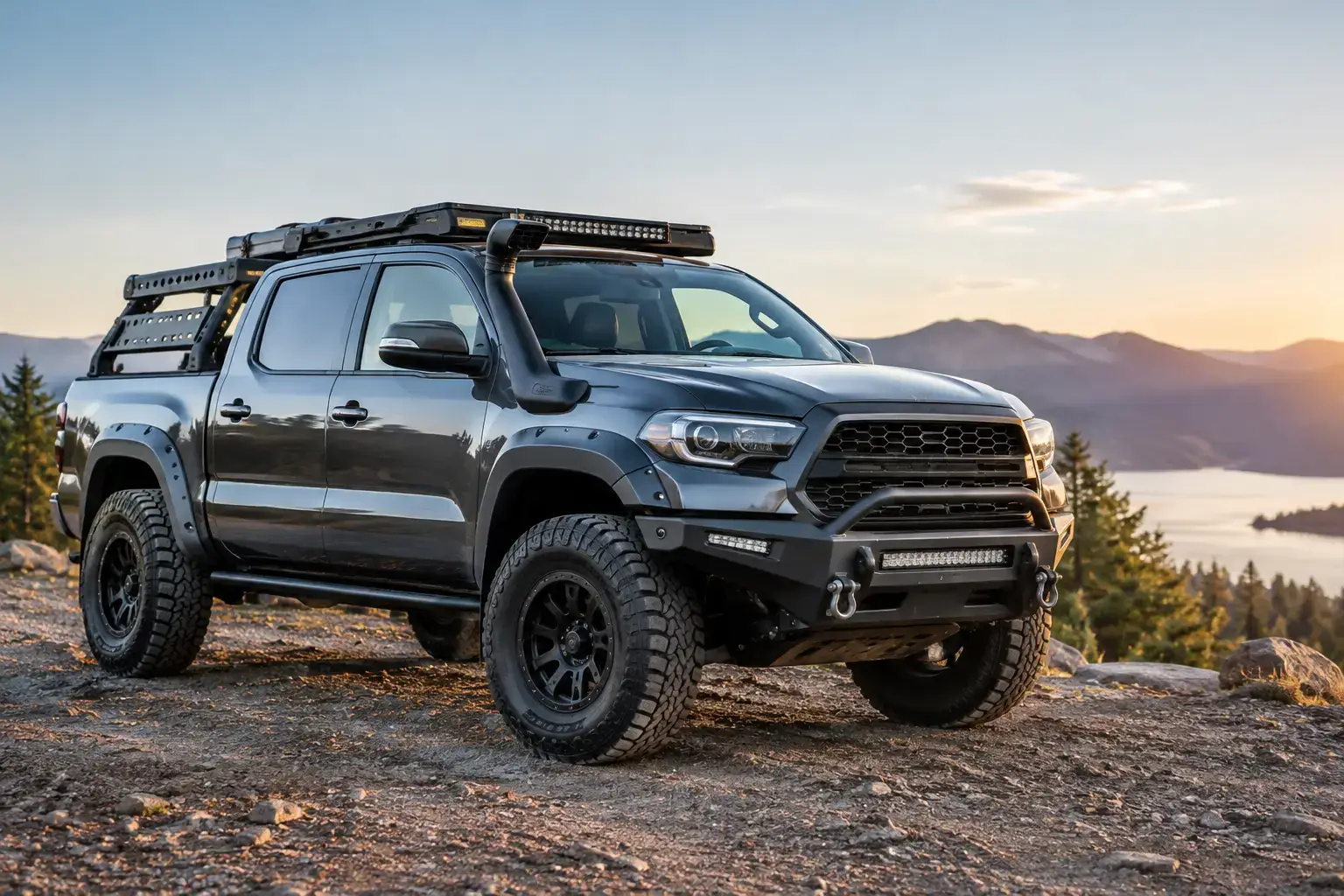
A truck can be a work tool Monday through Friday and the center of the meet on Saturday night. The right truck accessories should support both sides of that life. Whether you want more ground clearance, a tougher stance, better trail visibility, cleaner cargo management, or modern tech in the cab, every upgrade needs to fit the truck, your driving habits, and the look you are building.
The bad move is adding parts just because they look good in a product photo. A truck build works when its suspension, wheel setup, lighting, and utility gear all make sense together. Start with a purpose, then build outward.
Start With the Job Your Truck Needs to Do
Before ordering anything, be honest about where and how the truck gets used. A daily-driven Silverado in Las Vegas traffic has different needs than a Tacoma that sees desert trails every weekend. A Ram that tows equipment needs a different setup than an F-150 built for shows, cruising, and late-night meets.
Think about ride quality, towing, payload, garage clearance, fuel economy, and how much road noise you can live with. Bigger is not always better. A massive lift and oversized tires may create the aggressive look you want, but they can also affect steering feel, braking, gearing, and tire wear if the rest of the build is ignored.
A solid build begins by picking a priority. Do you want capability, appearance, comfort, security, performance, or a mix of all of it? Once that answer is clear, choosing parts gets a lot easier.
Truck Accessories That Improve the Whole Build
The best upgrades are not random add-ons. They solve a problem, sharpen the truck’s style, or make every drive better. Often, they do all three.
Lift Kits, Leveling Kits, and Suspension Upgrades
Suspension is where many truck builds begin because it changes the whole attitude of the vehicle. A leveling kit can remove factory rake and create a cleaner stance without going extreme. It is a practical choice for drivers who want room for larger tires while keeping daily driving familiar.
A lift kit makes a bigger statement and can add useful clearance for off-road use. But lift height should match the truck’s purpose. More height may require supporting modifications such as upgraded shocks, control arms, steering components, brake line considerations, alignment work, and differential or driveline adjustments.
For drivers who want better control over rough roads and desert terrain, quality shocks or adjustable coilovers can matter more than lift height alone. The goal is not just to sit higher. The goal is to make the truck drive right when the road ends.
Wheels and Tires: The Stance Maker
Wheels and tires can make a stock truck look built in a single appointment. They also carry more responsibility than most people realize. Offset, backspacing, wheel diameter, tire width, load rating, and sidewall height all affect fitment and performance.
An aggressive wide wheel setup may look perfect, but it can rub at full lock or during suspension compression. A tire that is too heavy can dull acceleration and put more strain on braking components. For a work truck or tow rig, load-rated tires and dependable traction should come before a flashy tread pattern.
The sweet spot is a package that fills the wheel wells, matches the suspension height, clears properly, and suits how you drive. Proper mounting, balancing, and alignment are part of the upgrade, not an afterthought.
Lighting That Does More Than Look Good
Lighting is one of the fastest ways to modernize a truck. LED headlights, fog lights, grille lighting, bed lighting, rock lights, and auxiliary pods can improve visibility while adding serious visual impact.
Function comes first with lighting. Aim lights correctly, use proper wiring, and avoid setups that blind other drivers. For trail use, a focused forward-facing light setup can help spot obstacles. For job sites, bed lighting makes loading gear after dark much easier. For meets and shows, accent lighting and underglow can give the truck a look that does not disappear when the sun goes down.
Quality installation matters here. Loose wiring, poor grounds, and unprotected connections can turn a clean lighting upgrade into a headache after one wash or dusty weekend.
Utility Upgrades for Real Truck Owners
A truck bed is valuable space. Bed covers, racks, storage systems, tie-down solutions, steps, running boards, and hitch accessories help you use it without beating up your gear.
A tonneau cover can keep tools and groceries out of sight while improving the truck’s profile. A rack system makes sense for ladders, bikes, recovery gear, or oversized equipment. Running boards are especially useful on lifted trucks, but they need to be chosen for clearance and durability, not just appearance.
If you tow, put extra thought into the hitch, wiring, brake controller, trailer camera options, and mirrors. A clean tow setup makes hauling safer, easier, and less stressful when you are loading up before sunrise.
Audio, CarPlay, Cameras, and Cab Tech
The cab deserves attention too. Older trucks can feel completely different with Apple CarPlay or Android Auto, a backup camera, better speakers, a subwoofer setup, or a dashcam. These are upgrades you notice every single time you turn the key.
A modern head unit brings navigation, calls, music, and messages into one clean interface. A dashcam adds useful protection on the road and in parking lots. Backup and front-facing cameras help with tight spaces, trailers, and low obstacles that disappear below the hood line.
Audio should match your listening habits. A simple speaker and amplifier upgrade can deliver clear sound without taking over the cab. If you want bass that hits harder, a custom box can keep the installation clean while preserving as much practical space as possible.
Exhaust and Performance Mods
For some truck owners, the sound is part of the build. A custom exhaust can add a deeper tone, reduce restriction, and give the truck more personality. The right setup depends on the engine, the cabin noise you can tolerate, and local regulations.
Avoid choosing an exhaust based on loudness alone. A system that sounds great outside can create unpleasant drone on long highway drives. The best setup gives you the tone you want without making every commute feel like a race to the gas station.
Performance upgrades should be approached with the same mindset. Intake, tuning, and exhaust modifications can complement one another, but they need to be compatible with the truck’s drivetrain, maintenance needs, and intended use.
Do Not Skip Fitment and Professional Installation
Truck accessories are only as good as the install. A part can be high quality and still cause trouble if it is installed without checking clearances, electrical connections, torque specs, alignment angles, or factory safety systems.
This is especially true for suspension, wheels and tires, lighting, electronics, and anything involving towing. A lifted truck needs alignment after the work is complete. New wheels need clearance checked through the full steering range. Added lighting needs protected wiring and proper switching. Audio and camera installs need clean integration that does not create electrical issues later.
Professional installation also saves time when a build has multiple moving parts. Instead of guessing whether a wheel will clear a control arm or whether a tire will rub after a lift, you can build around actual measurements and real-world experience. That is how a truck comes out looking intentional instead of pieced together.
Build in Stages, Not in Panic Buys
You do not need to finish the entire truck in one weekend. In fact, staged builds usually make better decisions. Start with the foundation: suspension, wheels, tires, and any maintenance the truck needs. Then move into lighting, utility upgrades, performance, and cab tech.
This approach gives you time to live with each change. You may find that a moderate lift gives you all the clearance you need, or that upgraded tires improve the truck enough before adding more power. It also helps protect your budget from the expensive cycle of buying parts twice.
At Aftermarket Guru, the best truck builds are planned around the owner, not copied from someone else’s feed. Bring the vision, the work you need the truck to handle, and the budget you want to stay within. The right next upgrade is the one that makes you look back at your truck every time you park it.