
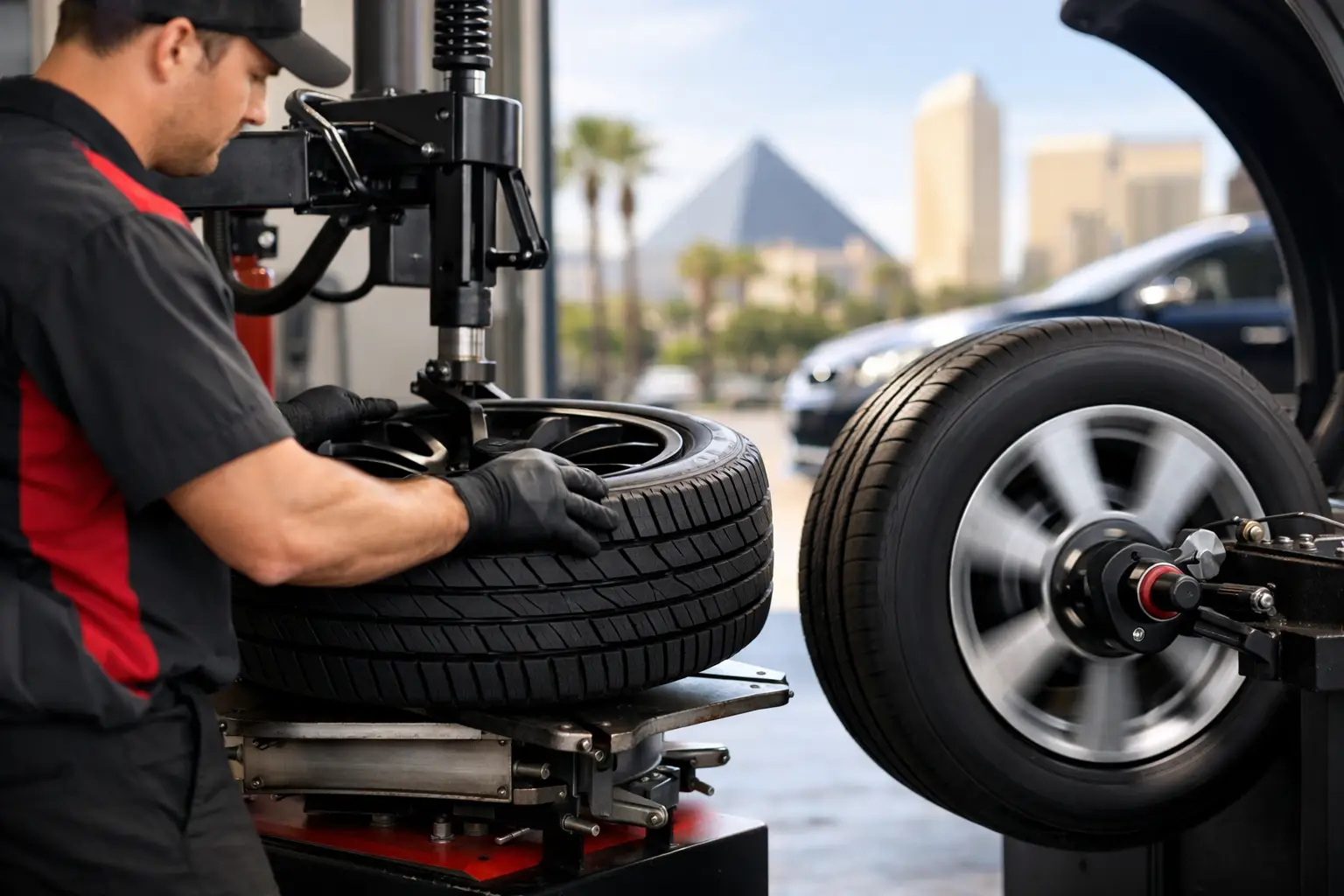
Las Vegas heat, long freeway runs, rough patches of pavement, and aggressive wheel setups can expose a tire problem fast. Tire mounting and balancing Las Vegas drivers choose should do more than get rubber onto a wheel. It should protect the finish, confirm the fitment, and help your car, truck, or SUV drive straight and smooth when you leave the shop.
A new set of tires is a performance upgrade, a safety item, and a major part of your ride’s look. Whether you are replacing worn daily-driver tires, installing wider performance rubber, fitting all-terrain tires after a lift, or mounting a fresh wheel-and-tire package, the details matter. A clean install makes the difference between a build that feels finished and one that shakes at 70 mph.
What Tire Mounting and Balancing Actually Covers
Tire mounting is the process of installing a tire onto the wheel, seating the bead correctly, and inflating it to the proper pressure. That sounds straightforward, but low-profile tires, oversized truck tires, specialty wheels, and stretched or wide fitments require extra care. The wrong tools or rushed handling can scratch a wheel, damage a tire bead, or create a poor seal that slowly leaks air.
Balancing comes next. Tires and wheels are not perfectly weight-neutral around their entire circumference. A balancing machine identifies where small counterweights need to be placed so the assembly spins evenly. Those weights reduce vibration in the steering wheel, floor, and seat at road speed.
Mounting and balancing work together, but they solve different problems. A tire can be mounted correctly and still vibrate if it is not balanced. It can also be balanced but lose air if the bead is not properly seated or the valve stem is failing. Good service checks the full assembly instead of treating the job like a quick swap.
Why Las Vegas Drivers Feel Tire Issues So Quickly
Desert driving is tough on tires. Summer pavement temperatures get extreme, and heat raises tire pressure as you drive. Underinflated tires build even more heat, while overinflated tires can wear harder through the center of the tread. Neither condition helps traction, ride quality, or tire life.
Las Vegas also means plenty of highway miles. A minor balance issue that feels almost invisible around town can become annoying on I-15, US-95, or the 215 beltway. At freeway speed, the vibration may show up through the steering wheel, the pedals, or the entire cabin. Let it go long enough and it can contribute to uneven tire wear and extra stress on suspension components.
Potholes, road debris, curbs, and construction zones add another variable. If a wheel takes a hit, a balance correction may help only if the wheel and tire are still in good shape. A bent wheel, damaged belt, or tire that has developed a flat spot needs a proper inspection before anyone assumes new weights will fix it.
Tire Mounting and Balancing for Custom Setups
Factory-size tires are one thing. Aftermarket fitment is where experience earns its place.
If you are adding larger wheels to a sports car, the tire’s sidewall height, width, load rating, and overall diameter all need to make sense together. A tire that technically mounts may still rub the fender liner, contact suspension hardware, or create an undesirable speedometer difference. On lowered cars with coilovers, clearance can change dramatically under steering lock and suspension compression.
Truck and SUV owners face their own fitment questions. Bigger all-terrain or mud-terrain tires can transform the stance and capability of a build, but they may require the right wheel offset, a lift kit, trimming, or alignment adjustments. A tire that clears while parked is not automatically clear when the suspension moves.
Luxury, European, JDM, and exotic vehicles often use staggered tire sizes, directional tread patterns, or wheels that need a careful touch. Directional tires must be mounted in the correct rolling direction. Asymmetrical tires have an inside and outside sidewall. Staggered setups cannot be casually rotated front to rear. These details affect handling, traction, and how long the tires last.
At Aftermarket Guru, tire service can be part of the bigger plan. If you are pairing wheels and tires with a lift, coilovers, brake upgrades, or an aggressive exterior build, it makes sense to consider fitment before parts start arriving. That helps avoid the expensive problem of ordering a setup that looks right online but does not work on the vehicle.
Signs Your Wheels May Need Attention
Vibration is the obvious sign, but it is not the only one. A steering-wheel shake that starts around a particular speed often points to a front wheel or tire balance issue. A vibration felt more through the seat may be related to a rear tire, although the vehicle’s suspension and drivetrain can change what you feel.
Do not assume every shake is a balancing problem. If the vehicle pulls, the steering wheel is off-center, or the tread is wearing unevenly, an alignment may be needed. If you hear a thump that changes with speed, feel a rhythmic hop, or see a bulge in the sidewall, stop treating it as a comfort issue. Those can point to tire damage that deserves immediate attention.
You should also consider a balance check after a hard pothole hit, a curb strike, replacing a tire, or noticing a missing wheel weight. For vehicles that see track days, canyon runs, off-road use, or frequent highway mileage, checking tire condition regularly is smart maintenance, not overkill.
What a Careful Service Visit Should Include
The best outcome starts before the tire machine turns on. The technician should verify tire size, wheel size, tire condition, and the intended fitment. For a custom setup, that means looking at the whole vehicle rather than only reading numbers off the sidewall.
The wheel should be inspected for visible bends, cracks, corrosion around the bead area, and old adhesive residue that can interfere with new weights. The tire should be checked for punctures, uneven wear, exposed cords, sidewall damage, and any sign that it is not safe to reinstall.
During mounting, the goal is a correctly seated bead without damaging the wheel or tire. Valve stems and tire pressure monitoring system sensors deserve attention too, especially on vehicles with older sensors or wheels that have been swapped before. A warning light after a tire job is not something a driver should have to chase down later.
After balancing, the tire pressure should be set for the vehicle and setup, not guessed. The correct pressure depends on the tire, the vehicle’s weight, the load you carry, and the manufacturer’s guidance. A lifted truck on larger tires and a low-profile performance car will not always use the same approach.
Protecting Your Tires After Installation
Freshly mounted and balanced tires still need a little follow-through. Check pressure when the tires are cold, especially when seasons change or a Las Vegas heat wave hits. Look over your tires once a month for nails, cuts, unusual tread wear, and low pressure. It takes only a minute and can save a tire before damage becomes permanent.
Keep an eye on the first few drives after installing new wheels and tires. Listen for rubbing during turns, over bumps, and with passengers or cargo in the vehicle. If the steering feels different, the ride vibrates, or a tire pressure light appears, bring it back for inspection rather than hoping it settles down.
Wheel torque matters as well. After wheel removal and installation, lug hardware should be tightened to the proper specification for the vehicle and wheel. Do not trust an impact gun alone as the final word. Correct torque protects the wheels, studs, and your peace of mind.
Your tires are the only parts of your build that touch the road. Give them the same attention you would give a custom exhaust, suspension setup, or fresh wrap, and your ride will look better, drive cleaner, and stay ready for every mile across Southern Nevada.
4 responses to “Tire Mounting and Balancing Las Vegas Done Right”
[…] faster than almost any other upgrade, but they are not a simple cosmetic choice. Offset, width, tire sizing, brake clearance, suspension travel, and fender clearance all matter. On a low, high-performance […]
[…] not treat tire size as a visual afterthought. Confirm the complete wheel-and-tire package before ordering. If the vehicle has a lift, leveling kit, coilovers, air suspension, aftermarket […]
[…] price of the project. That is where people get caught off guard. Wheels may need tires, sensors, mounting, balancing, alignment, and possibly suspension adjustments. A lift kit can require additional components, […]
[…] proper inspection should include tire condition, wheel balance when vibration is present, alignment measurements, and a look at the steering and suspension […]