
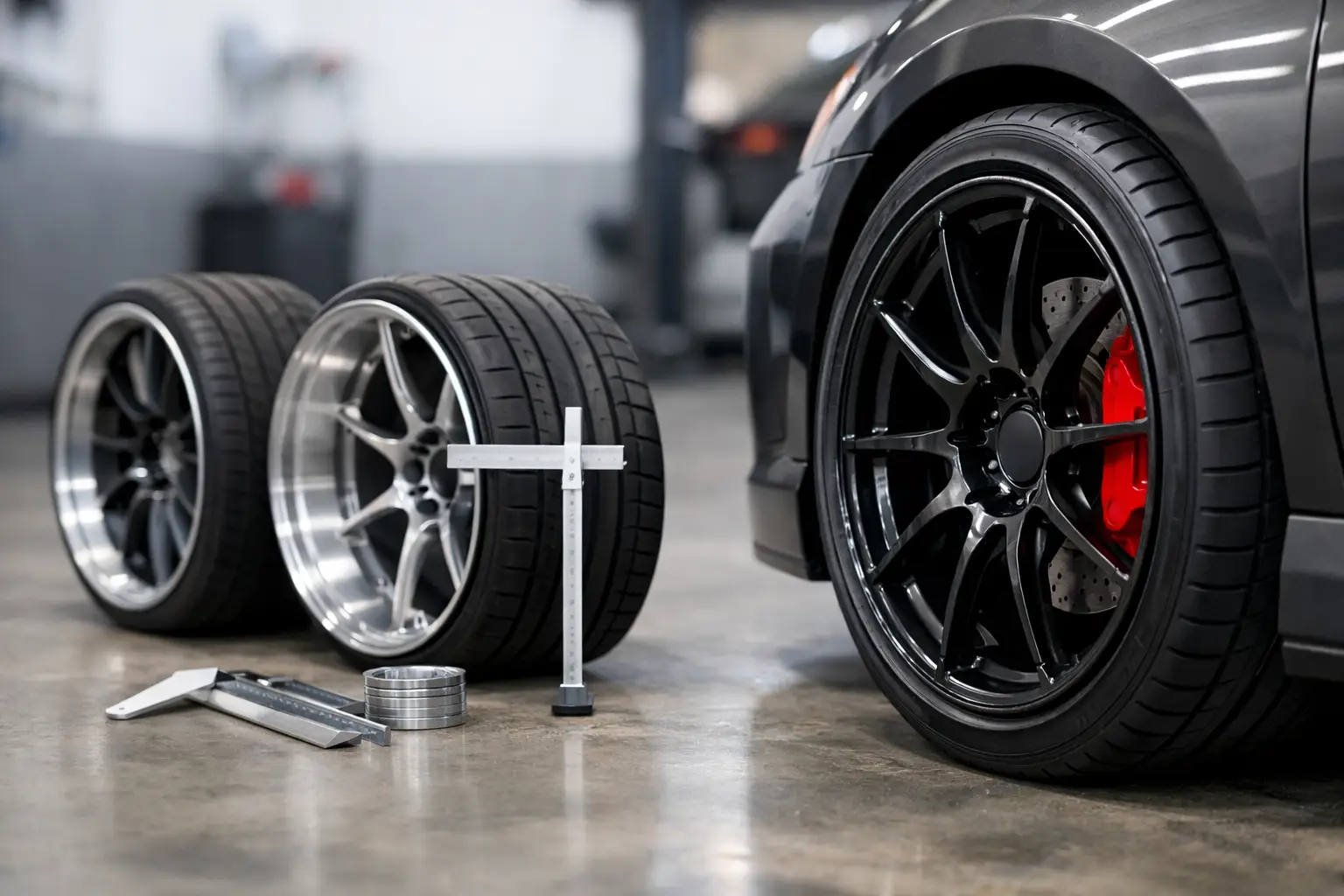
A wheel can look perfect on a product page and still rub a strut, chew up a fender liner, or sit awkwardly inside the wheel well once it is on your vehicle. This guide to wheel offset fitment breaks down the measurement that separates a clean, aggressive setup from an expensive mistake.
Offset is not just a stance number. It affects brake clearance, suspension clearance, steering travel, tire wear, and whether your truck, SUV, or car can actually be driven hard without contact. Before ordering wheels, get the fitment right.
What Wheel Offset Actually Means
Wheel offset is the distance between the wheel’s centerline and its mounting pad, measured in millimeters. The mounting pad is the surface that sits flush against your hub.
A positive offset means the mounting pad sits toward the outside face of the wheel. That pulls the wheel farther inward toward the suspension. Most late-model front-wheel-drive cars, many European vehicles, and plenty of newer trucks use positive offset wheels.
A negative offset puts the mounting pad closer to the back of the wheel. That pushes the wheel outward, creating the deeper-lip, wider-track look common on lifted trucks and certain aggressive off-road builds. Zero offset means the mounting pad is centered with the wheel barrel.
Here is the part that catches people: a lower offset moves the wheel outward, while a higher offset moves it inward. A change of 10 mm is noticeable. A change of 25 mm can completely change clearance and stance.
Guide to Wheel Offset Fitment: Read the Numbers Together
Offset never works alone. A wheel spec such as 20×10 -18 or 18×9.5 +35 tells a larger story. The first number is diameter, the second is width, and the final number is offset.
Wheel width changes where both edges of the wheel sit. Offset changes where that entire wheel is positioned relative to the hub. That is why copying an offset from another build without matching wheel width, tire size, suspension, and brake setup can go sideways fast.
For example, moving from an 8-inch-wide wheel with +45 offset to a 9.5-inch wheel with +35 offset does two things. The wheel gets wider by 1.5 inches, and it moves outward by 10 mm. The inner edge may still move closer to the strut despite the lower offset because added width is split across both sides of the centerline. This is where eyeballing stops working.
Backspacing is another measurement worth knowing, especially in truck fitment. It measures from the wheel mounting surface to the inside edge of the wheel. More backspacing generally pulls the inner wheel edge closer to suspension components. Less backspacing pushes the wheel outward. Offset and backspacing describe related geometry, but they are not interchangeable unless wheel width is included.
Clearance Matters More Than a Parked Photo
A wheel setup should clear the vehicle in motion, not only while it is sitting level in a parking lot. Turn the steering wheel, hit a dip, load passengers, tow a trailer, or articulate a lifted truck off-road and the relationship between tire, fender, suspension, and bumper changes.
On cars with coilovers, the tire and wheel barrel need room around the spring perch and strut body. On performance builds, big brake calipers may require specific spoke profiles, not just the correct offset. A wheel can clear the caliper face but still hit the caliper barrel.
On trucks and SUVs, the usual conflict points are the upper control arm, sway bar, fender liner, mud flap, bumper valance, and rear portion of the front fender. Larger tires make these issues more likely, especially when paired with low or negative offset wheels. A lift kit creates more vertical room, but it does not automatically solve rubbing at full steering lock.
Lowered vehicles have their own trade-offs. A flush wheel and tire package can look right with a mild drop, then contact the fender when the suspension compresses. Rolling or modifying fenders may help in some cases, but that decision should follow real measurements, not hope.
Choose Your Fitment Goal First
There is no single best offset. The right number depends on what you want the vehicle to do and how much compromise you are willing to accept.
An OEM-plus setup usually keeps the tire safely under the fender and preserves predictable clearance. It works well for daily drivers, luxury vehicles, and customers who want a clean upgrade without turning every driveway into a test.
A flush setup brings the outer tire sidewall close to the fender line without poking past it. This is popular on sedans, coupes, and SUVs because it looks intentional without being overbuilt. It still needs careful tire selection and suspension-aware measurements.
A poke or deep-dish setup places the wheel farther outward. It delivers the wide, planted look many truck owners and show-build customers want, but it can increase splash, throw road debris down the body, place more stress on steering and suspension parts, and create fender contact. In Nevada, tire coverage rules and inspection considerations are worth discussing before going extreme.
Track and performance fitment prioritizes brake clearance, tire width, steering response, and repeatable behavior under load. The most aggressive-looking wheel is not always the fastest or most confidence-inspiring option through a corner.
Tires Can Make or Break the Same Wheel Setup
Two tires with the same labeled size can fit differently. Sidewall shape, tread width, carcass construction, and manufacturer design all affect real-world clearance. A 285 tire from one brand may run wider or squarer than a 285 from another.
This matters when you are already close to a strut, fender, or control arm. A stretched tire can create more outer fender clearance but may not suit a heavy truck, rough roads, or a vehicle that sees hard use. A wider, square-shouldered tire can look better and protect the wheel lip, but it needs more room.
Do not treat tire size as a visual afterthought. Confirm the complete wheel-and-tire package before ordering. If the vehicle has a lift, leveling kit, coilovers, air suspension, aftermarket arms, or upgraded brakes, those details belong in the fitment conversation too.
Spacers Are a Tool, Not a Shortcut
A quality hub-centric spacer can be useful when a wheel sits slightly too far inward or needs extra brake clearance. But a spacer effectively lowers offset. A 10 mm spacer on a +35 wheel creates the equivalent of approximately +25 offset.
That adjustment may solve one problem while creating another, such as tire poke or fender rub. Spacers also require correct hub engagement and, depending on thickness, proper stud length or a bolt-on design. Cheap universal spacers and rushed installation are not the move on a vehicle you care about.
If a wheel requires a massive spacer just to clear the brakes or suspension, it may simply be the wrong wheel spec. Start with the right fitment whenever possible.
Measure Before You Order
The best builds start with vehicle-specific data. Know your bolt pattern, center bore, current wheel width and offset, tire size, brake package, suspension changes, and the clearance you have at the inner and outer edges.
A fitment calculator can show the direction of change, but it cannot see your particular coilover perch, brake caliper, aftermarket control arm, or previously repaired fender. Physical measurement still wins. A test fit is even better for custom applications, uncommon vehicles, exotics, and builds mixing multiple upgrades.
Bring photos of the stance you want, but be honest about how you use the vehicle. A slammed show car, a daily-driven Euro sedan, a desert-run truck, and a widebody performance build should not be spec’d the same way. At Aftermarket Guru, that conversation happens before parts are ordered, not after a fresh tire has already rubbed through a liner.
Common Offset Mistakes to Avoid
The first mistake is ordering based only on wheel diameter. A 20-inch wheel may fit your vehicle in theory, but width and offset decide where it actually sits. The second is assuming a lift kit means any wheel and tire combination will clear. Steering and rearward tire contact still matter.
Another common mistake is forgetting about brake upgrades. Factory wheels may clear factory brakes but not a larger caliper package. Finally, do not confuse aggressive fitment with better fitment. If the tire hits under compression, the wheel sticks too far out, or steering feels compromised, the setup is not dialed in.
The right offset makes the whole build look deliberate: the wheel sits where it should, the tire clears where it must, and the vehicle performs like it is supposed to. Measure the full setup, choose a goal that matches how you drive, and let the finished stance earn the attention.