
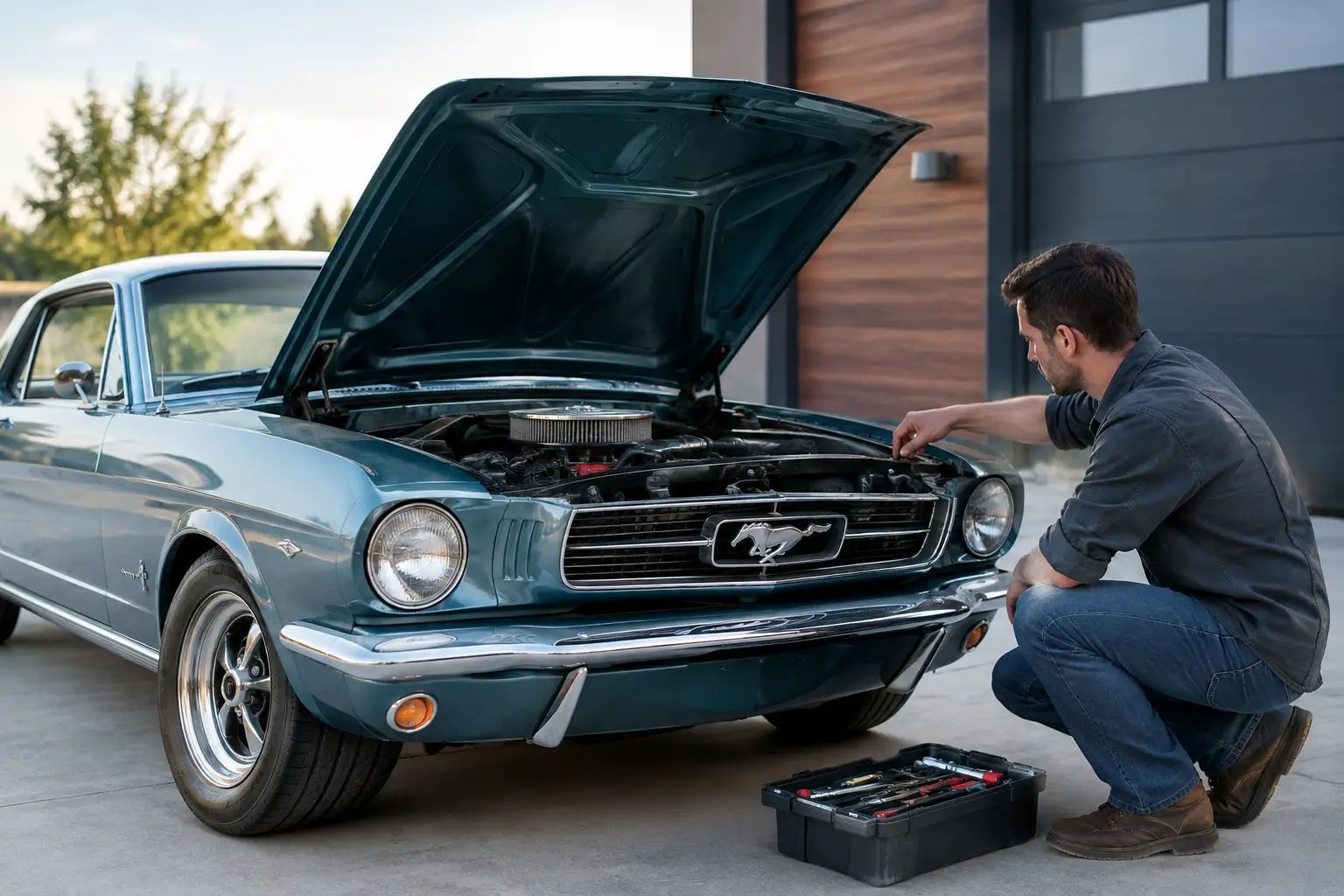
A classic car should not have to choose between being cool and being usable. If you are figuring out how to modernize classic cars, the move is not to erase everything that made the vehicle special. It is to fix the parts that make you leave it parked: weak brakes, hot cabins, sketchy night visibility, unreliable cooling, bad audio, and a driving position built for another era.
The best modernized classics still look right when you walk up to them. Then you turn the key, hit the road, and realize the brakes inspire confidence, the A/C works, your phone connects, and the car handles Vegas heat without drama. That is the goal: more miles, more comfort, and more confidence without losing the character.
Start With the Driving Problems, Not the Parts List
A catalog can make every upgrade look necessary. It is not. Before ordering wheels, screens, or suspension components, be honest about what keeps you from driving the car.
Maybe your 1960s muscle car wanders at freeway speed. Maybe your square-body truck overheats in traffic. Maybe your classic import has a great engine but headlights that feel like candles. A vintage European car may need better cooling and charging before it needs a modern audio system. The right build starts with the problem you want solved.
This also protects the budget. A clean, reliable electrical foundation and healthy cooling system matter more than a giant touchscreen if the vehicle cannot make it across town. Build in stages when needed. Handle safety and reliability first, then comfort and tech, then appearance and performance.
Modernize Classic Cars in the Right Order
1. Make it stop, steer, and handle first
More power is fun. More control is smarter. Brake upgrades are one of the highest-value changes on an older vehicle, especially when it still runs original drums, tired rubber lines, or a marginal master cylinder. Disc brake conversions, quality pads and rotors, refreshed brake lines, and properly matched components can completely change how secure a classic feels in traffic.
Suspension deserves the same attention. Worn bushings, old shocks, loose steering, and tired leaf springs can make an otherwise clean build drive like a handful. Depending on the platform and intended use, the answer may be upgraded shocks, coilovers, performance springs, control arms, sway bars, or a full suspension refresh.
Do not assume lower is always better. A slammed classic may look great at a meet but scrape on every driveway and ride rough on real roads. Likewise, a lifted vintage truck needs correct geometry, steering setup, wheel offset, and tire clearance. Fitment is not an afterthought. It is what keeps a build looking hard without driving badly.
2. Upgrade cooling and electrical reliability
Las Vegas does not care that your car is a collector piece. High temperatures expose weak radiators, aging hoses, tired fans, old wiring, and low-output alternators fast.
An aluminum radiator, properly sized electric fans, a fresh thermostat, quality hoses, and a clean cooling-system service can make a major difference. But parts alone do not fix a bad setup. Fan direction, shrouding, airflow, radiator capacity, and wiring all need to work together. A powerful electric fan with poor shrouding can still leave you watching the temperature gauge climb.
Electrical upgrades should be planned around the accessories you actually want. Adding CarPlay, amplifiers, LED lighting, a dashcam, electric fans, and power windows puts a different demand on a 50-year-old charging system. An alternator upgrade, modern fuse panel, relays, proper grounds, and clean wiring may be necessary before adding more electronics.
This is the unglamorous side of a modern build, but it is what makes the cool stuff reliable.
3. Bring the cabin into this decade
You do not need to fill a classic dashboard with giant screens to enjoy modern tech. A clean CarPlay or Android Auto retrofit can give you navigation, calls, music, and backup camera support while keeping the interior’s original style intact. Some setups can be mounted discreetly, while others replace an existing radio location with a period-friendly unit.
Think about how you use the car. If it sees long drives, Bluetooth calling, navigation, USB charging, and better audio are easy wins. If it is a weekend cruiser, a simple hidden amplifier and upgraded speakers may be enough. A properly designed audio system should sound full without rattling panels or turning the trunk into a wiring nightmare.
Dashcams also make sense for classics, especially vehicles that draw attention wherever they park. A professional installation can keep wires hidden, protect the interior, and avoid tapping into the wrong circuit. Add a backup camera if rear visibility is limited. Classic body lines are beautiful, but many old cars were not designed with crowded parking lots in mind.
A/C is another upgrade that changes whether a vehicle gets driven. Modern air-conditioning systems can often be integrated cleanly, but the vehicle needs enough cooling capacity and electrical support to handle them. In Southern Nevada, cold A/C is not a luxury flex. It is driveability.
Better Lighting Without the Cheap Look
Old sealed-beam headlights and faded housings can turn a night drive into guesswork. Modern lighting improves safety, but it needs to be done with care. Random LED bulbs installed in housings not designed for them can create glare, poor beam patterns, and a look that does not suit the car.
Choose lighting based on output, beam control, and style. LED headlights, upgraded housings, auxiliary driving lights, cleaner taillights, and properly wired relays can make a classic much easier to see and drive after dark. For a custom build, accent lighting and underglow can add personality, but keep the installation clean and make sure the system is wired and mounted for real-world use.
The best lighting upgrades look intentional in daylight and work even better at night.
Wheels, Tires, and Stance Change Everything
Few modifications transform a classic faster than the right wheel-and-tire package. They can also create expensive problems when chosen by looks alone.
Wheel diameter, width, offset, backspacing, tire sidewall, brake clearance, suspension travel, and fender clearance all matter. A set of wheels that looks perfect in a photo may rub under compression, hit the steering components, or sit too far outside the body on your platform.
The right setup depends on the era and personality of the build. A pro-touring Camaro, a lowrider Impala, a vintage Bronco, a Datsun, and an air-cooled Porsche should not all get the same formula. Period-correct style may be the move, or a modern wheel design may fit the vision better. Either way, get the measurements right before spending money on tires.
Once the stance is set, schedule a proper alignment. A classic that tracks straight and does not chew through expensive tires is always more satisfying than one that only photographs well.
Preserve What Makes the Car Worth Building
Not every classic should be modified the same way. A rare, highly original, numbers-matching vehicle may deserve a lighter touch, with upgrades that can be reversed later. A driver-grade car, unfinished project, or restomod candidate gives you much more freedom.
Keep original parts when practical, especially trim, gauges, radios, steering wheels, and hard-to-find components. Even if you install modern replacements, boxed original pieces can help with future resale or a later restoration. Reversible upgrades are a smart middle ground for owners who want modern use without permanently changing the car.
Avoid building for the next owner, though. If the vehicle is yours to drive, make decisions around your actual habits. Do you cruise on weekends, commute occasionally, take road trips, hit shows, or want a canyon carver? Your answer should shape every upgrade.
Use a Build Plan, Then Let the Details Hit
A modern classic comes together when the upgrades work as a package. Bigger brakes may require wheel changes. Electric fans may require an alternator upgrade. New wheels may lead to suspension tuning and alignment work. CarPlay, audio, cameras, and lighting all need a wiring plan instead of a stack of random add-ons.
That is why a single-shop approach helps. At Aftermarket Guru, a classic can be evaluated as a complete build rather than a series of disconnected installs. The result is cleaner fitment, fewer surprises, and a vehicle that feels finished instead of constantly mid-project.
Build the classic you will actually drive. Keep the body lines, engine note, and personality that made you want it in the first place. Then give it the brakes, cooling, lighting, suspension, and tech to earn a spot in your weekly rotation instead of collecting dust under a cover.