
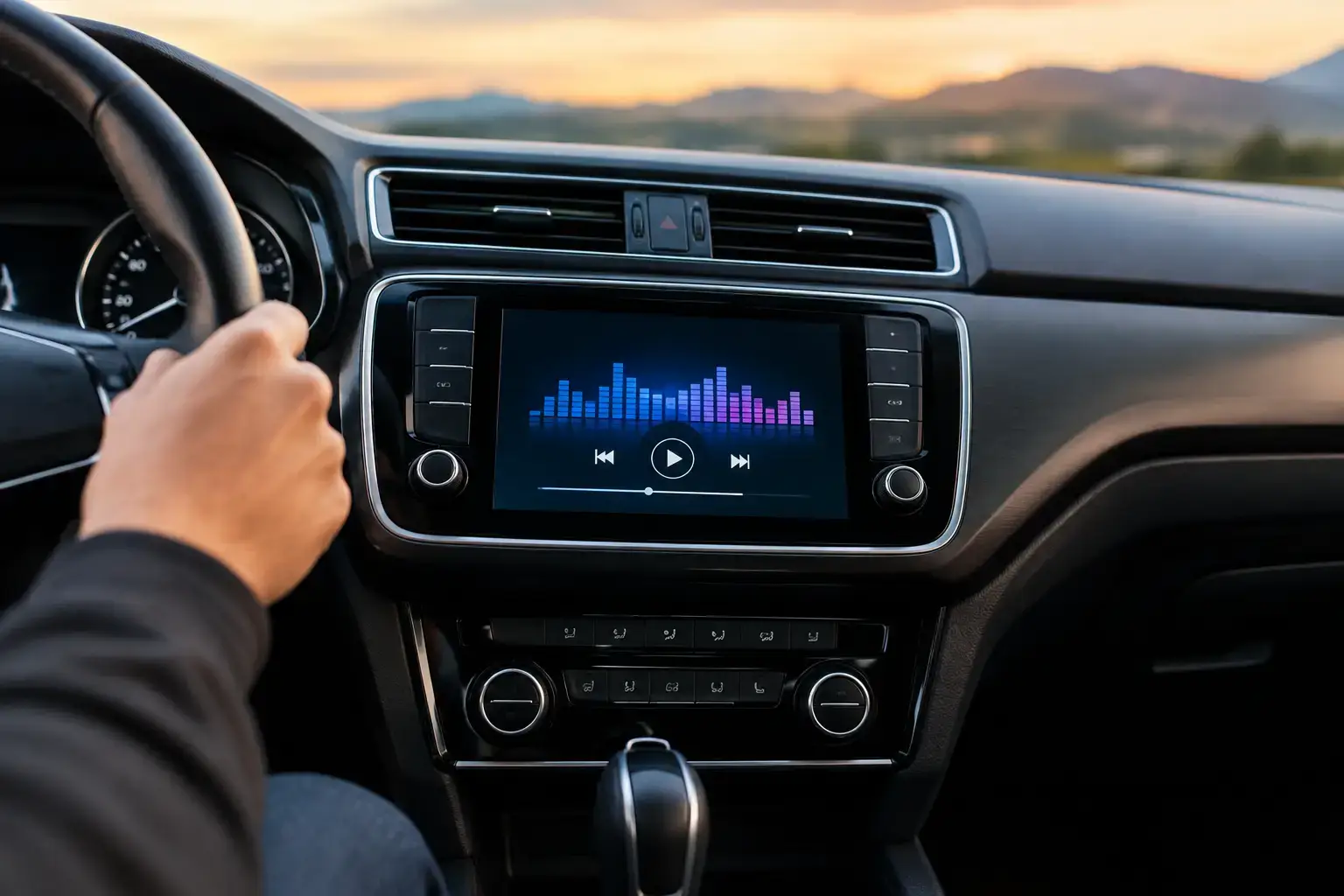
A factory radio can make a clean car feel dated fast. Weak volume, muddy bass, Bluetooth dropouts, no CarPlay, and speakers that crack the second you turn it up are not part of the driving experience anybody wants. The right car stereos turn traffic, late-night cruises, trail runs, and daily commutes into something you actually look forward to.
But good audio is not just about buying the loudest speakers or the biggest subwoofer box. Your vehicle, music taste, budget, available space, and goals all matter. A clean, balanced system with proper installation will beat a pile of mismatched gear every time.
Start With What You Want From Your Audio System
Before picking equipment, decide what you want your system to do. Someone restoring an older truck may want wireless Apple CarPlay, backup camera support, and clear hands-free calls. A bass-heavy build may need an amplifier, subwoofer enclosure, upgraded wiring, and sound treatment. A performance car owner may want better sound without filling the trunk or adding unnecessary weight.
There is no single best setup. The right system depends on how you use the vehicle.
If you mainly want better everyday sound, replacing worn factory speakers and adding a modern head unit can make a major difference. If you want real low-end impact, a subwoofer and correctly matched amplifier are where the system starts to come alive. If you want a show-ready install, custom fabrication, lighting, flush-mounted amps, and a custom box can make the audio system part of the build.
Be honest about your priorities. More bass is fun, but it may take cargo room. High-output amplifiers deliver serious volume, but they can require electrical upgrades. A clean OEM-style look may limit screen size or enclosure options. Good planning keeps the finished system from becoming a compromise you regret later.
Car Stereos Begin With the Right Head Unit
The head unit is the command center. It controls source selection, phone connectivity, navigation, camera inputs, audio adjustments, and signal sent to the rest of the system. On older vehicles, a modern radio can be one of the most noticeable upgrades you can make.
Apple CarPlay and Android Auto are high on the list for a reason. They put maps, calls, messages, music, and supported apps on a screen designed for quick use behind the wheel. Wireless connectivity keeps the cabin cleaner, while wired connections can be more reliable and keep your phone charged on longer drives.
Screen size matters, but fitment matters more. A large floating display can look incredible in the right dashboard and feel completely out of place in another. Some vehicles need dash kits, vehicle-specific interfaces, retention modules, or custom fabrication to preserve factory controls, cameras, warning chimes, and steering-wheel buttons.
That is where professional installation pays off. The radio needs to work with the vehicle, not just fit in the opening. A system that loses factory features, drains the battery, or throws electrical issues is not an upgrade.
Speakers: Clarity Before Volume
Factory speakers are often built to meet a price point, not to deliver detail. Replacing them can bring back vocals, guitar, percussion, and the small details that disappear in a stock system. Still, speaker selection is about more than grabbing the highest advertised wattage.
Component speakers separate the tweeter from the woofer, which can improve imaging and clarity when installed correctly. They are a strong option for front doors, where the driver and passenger hear most of the soundstage. Coaxial speakers combine those elements in one unit and are often a practical fit for rear doors, rear decks, or straightforward upgrades.
Sensitivity, power handling, mounting depth, impedance, and crossover design all affect results. A speaker that performs great with an external amplifier may sound underpowered on factory radio power. A deep speaker may not clear the window track inside your door. Even the best equipment needs the right fitment.
Installation details make a difference here. Proper mounting adapters, sealed surfaces where needed, secure fasteners, and correct polarity help speakers play the way they should. Door treatment can also reduce rattles and road noise, allowing you to hear more music without forcing the system to work harder.
Amps and Subs: Get the Bass Right
A subwoofer is not only for making license plates shake. It handles low frequencies that smaller door speakers cannot reproduce effectively, taking strain off the rest of the system. When the system is tuned properly, bass feels fuller and more controlled instead of boomy and disconnected.
The enclosure is just as important as the subwoofer itself. A sealed box is usually tighter, more compact, and a strong choice for balanced sound quality. A ported box is often louder and more efficient in the low end, but it needs correct internal volume and port tuning. Off-the-shelf boxes can work well, but custom boxes are often the better move when space, appearance, or output goals are specific.
Amplifier matching is where many systems go wrong. The amp must provide stable, clean power at the correct impedance for the speakers or subwoofer. More power is not automatically better if the gain is set poorly or the speaker cannot handle it. Distortion and clipping can damage equipment faster than sensible power used correctly.
For higher-output systems, wiring is not an afterthought. Quality power and ground connections, correct fuse placement, appropriate wire gauge, and organized signal routing protect the vehicle and keep noise out of the system. In serious builds, the charging system may need attention too. If the lights dim every time the bass hits, the electrical system is telling you something.
Build for Your Vehicle, Not a Spec Sheet
A truck, a two-door coupe, a luxury SUV, and a classic car all present different audio challenges. Trucks may have limited room behind or under the rear seat, calling for a shallow subwoofer or custom enclosure. Sports cars may have almost no usable trunk space. Older vehicles may need modern features while keeping the dash period-correct. Luxury vehicles can use factory amplifiers, fiber-optic systems, or active noise control that require careful integration.
Las Vegas heat adds another consideration. Equipment mounted in a trunk, under a seat, or behind a panel needs proper ventilation and secure mounting. Adhesives, wiring protection, and component placement should hold up through extreme cabin temperatures, not just look good on installation day.
A clean install also respects the rest of the vehicle. Panels should fit back correctly. Wiring should not rattle, pinch, or interfere with moving parts. Camera views, HVAC controls, airbags, and factory electronics need to remain functional. The best systems look intentional, even when most of the work is hidden.
Common Mistakes That Kill a Good System
The biggest mistake is choosing gear one piece at a time without a full system plan. A powerful subwoofer with a weak electrical foundation, premium speakers running off poor factory power, or a new radio connected through cheap adapters can leave a lot of performance on the table.
Another common issue is tuning by ear with every setting maxed out. Bass boost, loudness, and gain are not volume knobs. Used carelessly, they create distortion and shorten the life of your equipment. Proper gain setting, crossover points, equalization, and time alignment can make a moderate system sound far better than an expensive system that was never tuned.
Do not chase volume alone. Loud is easy. Clean, controlled, musical sound that stays clear at volume is the real goal.
Make the Upgrade Feel Like Part of the Build
Audio should match the personality of the ride. A clean CarPlay retrofit and upgraded speakers may be exactly right for a daily-driven SUV. A lifted truck can benefit from a hard-hitting custom box that still leaves room for gear. A show car may call for color-matched panels, accent lighting, and visible fabrication. A classic deserves modern sound without a hacked-up dashboard.
Aftermarket Guru can help build an audio package around the vehicle you own and the way you drive it, from a simple radio and speaker upgrade to a full custom system. Bring the music you actually listen to, explain what you want more of, and leave room in the plan for the next upgrade. The best car audio setup is the one that makes you take the long way home.