
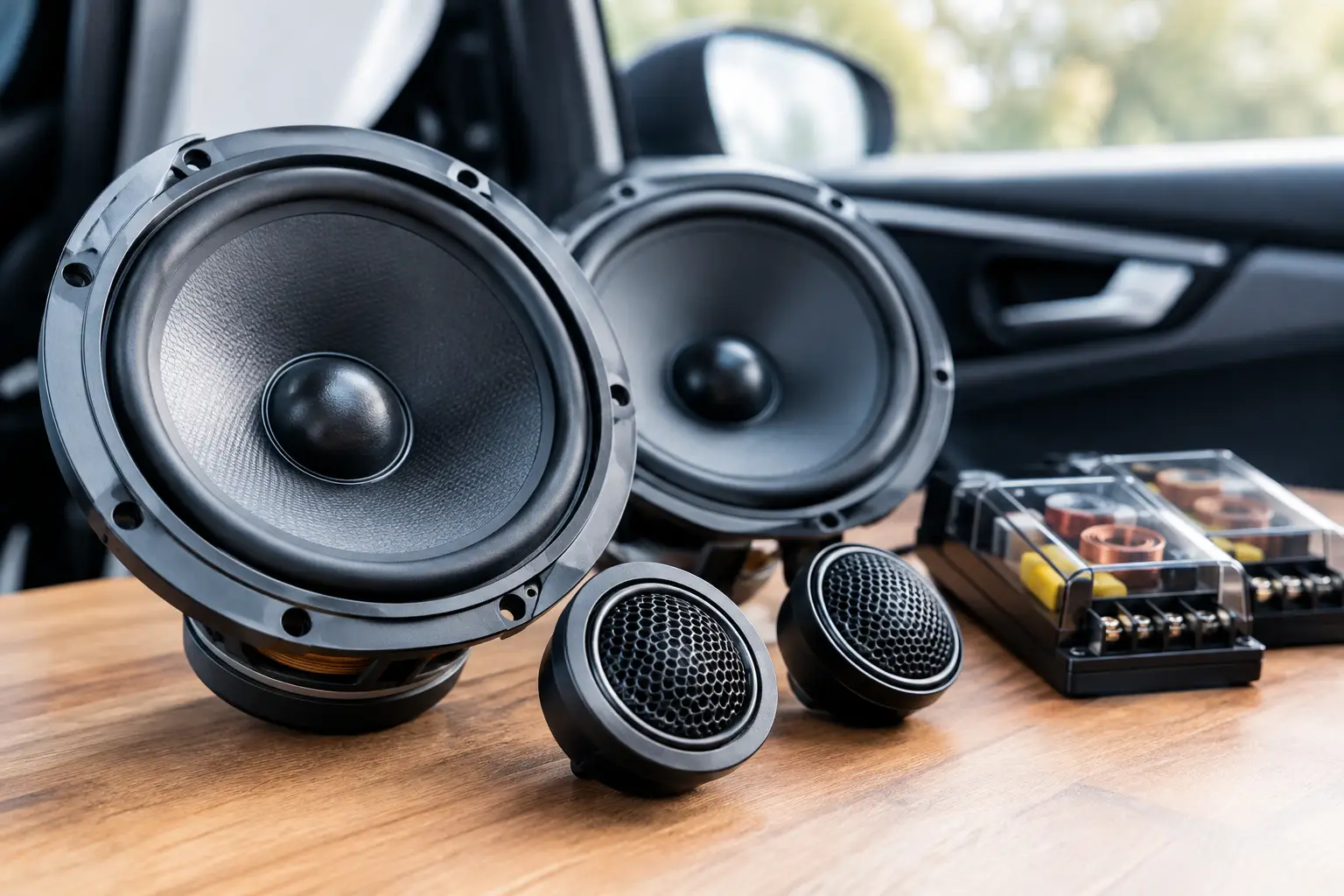
A new head unit can add CarPlay. Fresh tint can change the whole look. But when your factory speakers are buzzing, thin, or completely buried by road noise, a real audio upgrade changes every drive. The best car speaker upgrades are not always the most expensive ones. They are the ones matched to your vehicle, listening style, and the rest of your audio system.
Whether you drive a slammed import, a lifted truck, a daily SUV, or a luxury build that needs cleaner sound without losing factory features, the goal is the same: strong detail, real bass, and volume that stays clean when you turn it up.
Start With What Is Actually Missing
Factory speaker systems are built to hit a price point, not to impress. Many use lightweight paper cones, small magnets, and basic tweeters. They may sound acceptable at low volume, then get harsh, muddy, or distorted as soon as the road gets loud.
Before choosing speakers, figure out what is bothering you. If vocals sound muffled and cymbals disappear, your front speakers or tweeters are usually the first place to look. If music sounds clear but flat, you may need a subwoofer rather than larger door speakers. If the whole system cuts out or distorts at moderate volume, the problem could be weak factory power, a failing speaker, or an installation issue.
This matters because speakers, amplifiers, sound treatment, and subwoofers solve different problems. Throwing a powerful amp at worn factory speakers can make bad sound louder. Installing premium door speakers without enough power can leave money on the table.
The Best Car Speaker Upgrades Start Up Front
For most vehicles, the front stage delivers the biggest improvement. That is where the vocals, guitars, lead instruments, and detail should live. Rear speakers help fill the cabin, especially in larger SUVs and trucks, but they should not overpower the front.
Component Speakers for Detail and Imaging
Component speaker sets separate the woofer and tweeter. The woofer stays in the door or factory lower location, while the tweeter is mounted higher in the door, sail panel, dash, or A-pillar. A crossover sends the correct frequencies to each driver.
This setup gives you better clarity and a more realistic soundstage. Instead of music feeling like it is coming from your ankles, vocals can feel centered across the dash. Component speakers are a strong choice for drivers who care about sound quality, have room for a clean install, and plan to add an amplifier.
The trade-off is installation complexity. Tweeter location, crossover placement, and door panel fitment all matter. A bad tweeter angle can make a quality set sound sharp or tiring. Professional tuning and mounting make a noticeable difference here.
Coaxial Speakers for a Clean, Straightforward Upgrade
Coaxial speakers combine the woofer and tweeter into one unit. They often fit factory mounting locations with fewer modifications, making them a smart upgrade for daily drivers, older cars, and customers who want cleaner sound without turning the vehicle into a full audio build.
A quality coaxial set can bring back clarity, improve volume handling, and eliminate the rattle of tired original speakers. They are not automatically inferior to components. For a simple factory-radio upgrade, the right coaxials can be exactly what your ride needs.
Fitment still matters. Door depth, mounting brackets, factory connectors, window clearance, and grille spacing can all affect what works. The listing may say a speaker fits your vehicle, but that does not always account for every trim level or factory audio package.
Choose Speaker Materials for Your Drive
Speaker construction affects how the system sounds and how well it holds up over time. Las Vegas heat is hard on interior materials, especially in vehicles parked outside, so durability belongs in the conversation.
Polypropylene cones are common because they are moisture-resistant, durable, and balanced for daily use. They are a great all-around choice for doors. Treated paper cones can sound warm and natural, but material quality varies by brand and price point. Metal or composite cones can deliver fast, detailed response, though some systems need careful tuning to avoid a bright sound.
For tweeters, silk dome designs tend to sound smooth and easy to listen to over long drives. Aluminum, titanium, and other hard-dome designs can offer more crispness and high-frequency detail. Neither is the universal winner. If you listen to hip-hop, R&B, country, rock, EDM, or podcasts all week, a smooth tweeter may fit better than an ultra-bright setup designed only to impress during a quick demo.
Do You Need an Amplifier With New Speakers?
Sometimes yes. Often, that is where the real upgrade happens.
An aftermarket radio usually supplies more usable power than an older factory unit, but it still cannot provide the control and headroom of a dedicated amplifier. An amp helps speakers play louder with less distortion, improves midbass impact, and keeps the system composed when the volume comes up.
You do not need a massive competition setup to benefit. A properly sized four-channel amplifier paired with quality front and rear speakers is one of the best car speaker upgrades for drivers who want strong, clean daily sound. The speakers do not have to fight for power, and you get more out of the equipment you already chose.
Power matching is not about chasing the biggest watt number on a box. Look at RMS power ratings, not peak power claims. A speaker rated for 75 watts RMS needs an amp channel that can deliver appropriate clean power. Too little power driven into clipping can damage speakers. Too much power without proper gain setting can do the same.
Better Speakers Do Not Replace a Subwoofer
Door speakers handle midrange and midbass. They can make kick drums and bass guitar feel more present, but they are not built to create the deep low-end pressure of a proper subwoofer.
If you want bass you can feel, add a subwoofer and let your door speakers focus on what they do best. A compact powered sub can work well for a daily driver with limited space. A custom enclosure with a dedicated mono amplifier is the move for bigger output, deeper response, and a system built around your music.
Truck owners may prefer an under-seat enclosure to keep the cabin usable. Coupe and sedan owners often have more trunk options. SUV owners can run anything from a stealthy side enclosure to a serious custom box. The right answer depends on space, cargo needs, and how aggressive you want the bass to be.
Sound Deadening Is the Upgrade People Skip Too Often
You can install great speakers and still hear door-panel buzz, exterior noise, and sheet-metal vibration. Sound-deadening material applied inside the doors helps reduce resonance, improves midbass, and gives the speaker a more stable environment to work in.
It will not magically turn entry-level speakers into high-end audio, but it can make a properly designed system sound tighter and more expensive. It also helps on highway drives, where tire and wind noise can bury the detail you paid for.
For builds where clean sound matters, door treatment is worth discussing during installation. It is much easier to do while the panels are already removed for speakers.
Keep Factory Features Without Settling for Factory Sound
Modern vehicles can be complicated. Factory amplifiers, active noise cancellation, backup cameras, steering-wheel controls, warning chimes, and premium audio packages all affect how an upgrade should be planned. Luxury and late-model vehicles especially need the right integration hardware and tuning approach.
That does not mean you are stuck with stock sound. It means the installation needs to respect the vehicle’s electronics. A clean upgrade can retain factory functions while improving speakers, adding amplification, integrating a subwoofer, or pairing the system with a CarPlay or Android Auto retrofit.
Avoid cutting corners with random adapters or universal wiring when your vehicle needs a vehicle-specific solution. Clean signal, proper mounting, and correct integration protect both sound quality and the vehicle itself.
Build for the Music You Actually Play
A system for bass-heavy rap and EDM should not be planned exactly like a system for acoustic, classic rock, or talk radio. Someone who wants punchy low end at every stoplight needs different equipment and tuning than someone chasing vocal detail on a long commute.
Bring a few songs you know well when you listen to equipment. Pay attention to vocals, bass control, high-frequency harshness, and how the system sounds at the volume you actually use. A five-minute demo at low volume does not tell you how a speaker will perform on I-15 with the windows down.
At Aftermarket Guru, audio upgrades can be planned around the vehicle instead of forcing a one-size-fits-all package. That includes speaker fitment, amplifier power, custom box options, factory integration, and an install that looks as clean as it sounds.
Your first speaker upgrade does not have to be your final build. Start with the weakest link, install it right, and leave room for the next move. Clean front speakers today can become the foundation for amps, subs, and a full system later.