
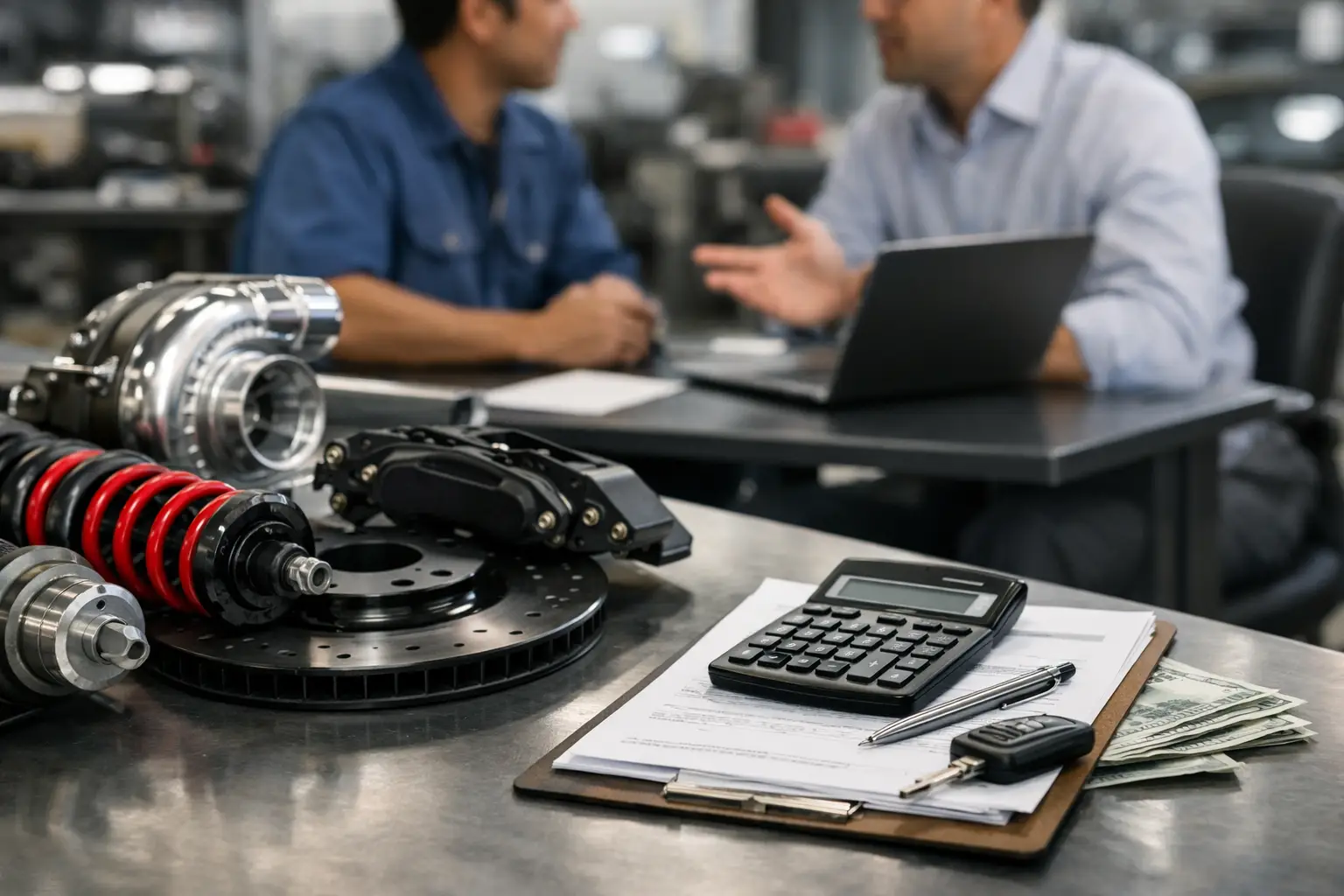
A lift kit, wheels and tires, a full audio upgrade, or a CarPlay retrofit can change how your vehicle looks and feels immediately. The hard part is often paying for everything at once. Aftermarket parts financing gives drivers a way to split a larger build into payments, so the project can move forward without draining the cash set aside for rent, travel, tires, or real life.
That does not mean every upgrade should be financed. It means the build deserves a plan. The right financing option can make a professionally installed upgrade more attainable. The wrong one can turn a fun project into a payment you regret every month.
What Aftermarket Parts Financing Can Cover
Financing may apply to parts, labor, or both, depending on the program and the shop. That matters because a vehicle upgrade is rarely just the product in the box. A set of wheels needs tires, mounting, balancing, sensors, and often alignment. A suspension setup may need supporting components, installation, and post-install adjustments. A clean result comes from planning the complete job, not just pricing the headline part.
Common projects that can make sense to finance include larger-ticket upgrades such as lift kits, coilovers, custom wheels and tires, audio systems, lighting packages, wraps, custom exhaust work, and technology retrofits. A driver restoring an older vehicle with Apple CarPlay, Android Auto, cameras, dashcams, and upgraded speakers may also prefer one planned project over several piecemeal appointments.
There is a difference between financing a useful, long-term upgrade and financing a quick impulse purchase. Safety-related repairs, worn tires, improved visibility, and a properly installed camera system can have daily value. Performance parts and cosmetic modifications can be just as rewarding, but they should fit your budget after the excitement wears off.
Start With the Full Build Price
Before comparing payment options, get clear on what the project actually requires. Ask for an estimate that separates parts, labor, taxes, and any supporting work needed to complete the install correctly. This avoids the common mistake of financing wheels but forgetting that tires, lug hardware, mounting, balancing, and alignment are still due.
For performance and suspension builds, fitment is where details matter. Wheel width, offset, tire size, brake clearance, ride height, alignment settings, and intended use all affect the final setup. A truck built for desert runs has different needs than a daily-driven luxury SUV. A lowered street car and a high-horsepower weekend car also call for different parts and installation decisions.
Be upfront about the end goal. If you know you want tint, lighting, audio, and a wrap over the next six months, it may be smarter to phase the work intentionally than to buy random parts that do not work together. A good shop can help organize the build in the right order so you are not paying twice to redo work later.
Decide What Must Happen Now
Separate the project into needs, performance priorities, and visual wants. Tires with low tread or a suspension issue belong at the top. A custom exhaust, underglow, or vertical door conversion may be a later phase if the budget is tight. There is no shame in building over time. Plenty of the best rides come together one well-chosen upgrade at a time.
The goal is not to make the monthly payment as low as possible. The goal is to finance only the portion you can comfortably handle while still getting the job done right.
Questions to Ask Before You Apply
Financing terms vary. Some options may offer promotional periods, while others use fixed monthly payments or deferred-interest structures. Read the agreement instead of relying on the payment number shown first. A low monthly payment can mean a longer term, more interest paid overall, or a large amount due if a promotional balance is not paid off on time.
Ask these questions before committing:
- What is the total amount financed, including taxes and installation?
- Is the interest rate fixed, variable, deferred, or promotional?
- What will the monthly payment be, and how many payments are required?
- Is there a penalty for paying the balance early?
- What happens if a payment is late or the promotional period ends?
- Can the financing be used for both ordered parts and shop labor?
These are not boring details. They are the difference between a payment plan that supports your build and one that eats into your future modification budget.
If you are considering a promotional offer, set reminders well before the deadline. Deferred-interest plans can be especially unforgiving when the balance remains unpaid at the end of the promotion. If the agreement says interest may be charged retroactively, treat that deadline like a hard due date, not a suggestion.
Build for Reliability, Not Just the Photo
A cheaper part can look like a win until it creates fitment problems, road noise, premature wear, or a second installation bill. This is especially true with suspension, lighting, electronics, wheels, and exhaust components. Financing a quality setup installed correctly can be a better value than financing the lowest-priced option and fixing problems later.
That does not mean the most expensive choice is always right. It depends on your vehicle, how you drive it, and what you expect from the upgrade. A daily-driven truck may need a dependable lift and tire package that rides well on Las Vegas streets. A show-focused build may prioritize finish and stance. An exotic or European platform may require more specialized parts and labor than a domestic pickup.
Talk through the trade-offs before ordering. For example, aggressive wheel fitment can affect ride quality and tire wear. Lowering a car may improve the look and response but can reduce ground clearance. A louder exhaust can add personality but may not be ideal for every commute. The best build is the one that fits your actual life, not just your saved photos folder.
Make the Payment Fit Your Real Budget
A modification should still leave room for fuel, insurance, maintenance, registration, and unexpected repairs. Before applying, look at your monthly cash flow and choose a payment that works even during a slower month. If the payment only works when everything goes perfectly, the project is too expensive right now.
A simple rule helps: if you cannot afford the monthly payment plus normal vehicle upkeep, reduce the project scope or wait. Consider a smaller down payment only if it does not wipe out your emergency cash. In many cases, a meaningful down payment lowers the financed amount and may make the monthly obligation easier to manage.
You can also use financing strategically. Finance the complete professional installation, then make extra payments when your budget allows. Paying early may reduce interest on some plans, but confirm the terms first. Do not assume every program works the same way.
When Phasing the Build Is the Better Move
Not every project needs to happen in one appointment. Phasing makes sense when one modification affects another or when you want to avoid stretching the financing amount too far. Start with the foundation: maintenance, tires, suspension, fitment, or the electrical work needed to support future accessories.
For example, a truck owner might handle wheels, tires, and lift components first, then add lighting and exterior accessories later. A car owner may begin with a CarPlay retrofit and dashcam, then move into audio, tint, coilovers, and wheels as the budget opens up. The key is choosing parts that work with the final vision instead of creating dead ends.
At Aftermarket Guru, the best conversations start with what you drive, what you want it to do, and where you want the build to end up. That gives the shop a chance to recommend a practical order of operations rather than pushing a one-size-fits-all package.
Use Financing to Support the Build, Not Control It
Aftermarket parts financing should give you options, not pressure you into adding upgrades you did not plan to buy. Stick to the parts and labor that serve your goal. Review the total cost, understand the payoff timeline, and make sure the finished vehicle will be worth the commitment to you.
Your ride can be a daily driver, a weekend toy, a work truck, or a full statement piece. Build it with intention, choose quality where it counts, and pick a payment plan that lets you enjoy the upgrade long after the first reveal.